
For a lot of Irish tradespeople, the van is the storage unit. Tools stay in it overnight, parked outside the house. For online sellers and small distributors, it’s the garage or the spare room.
Sooner or later, that stops feeling safe. The question becomes where to move things, and how secure each option really is.
Mobile vs self-storage security is one of the first comparisons business owners make. Both look similar on paper: a lockable steel space for your stock or equipment. In practice, the security depends on where the unit sits, who can reach it and how often you need to get in.
Key Takeaways
- Mobile storage covers two different setups: a container left at your premises or site, and a container collected and stored at the provider’s depot
- An on-site container is only as secure as the site, the lock and the people who pass it each night
- Collected mobile storage is usually kept in a secure depot, but you can’t get to your items without booking a delivery
- A monitored commercial unit gives you security and direct access at the same time
- Security works in layers: the lock, the site, monitoring, damp protection and your own habits
Is Mobile Storage or Self-Storage More Secure for Business Tools and Stock?
For most Irish businesses, a monitored commercial storage unit is usually the more secure option for tools and stock that need regular access. A mobile container left on your own site relies on your site’s security and the strength of the lock. Collected mobile storage is typically more secure but slow to access.
Two Kinds of Mobile Storage, Two Different Security Pictures
When people compare mobile vs self-storage security, they’re often comparing two different products under one name.
On-site mobile storage is a steel container delivered to your yard, driveway or job site. It stays there for as long as you rent it. You load it, lock it and hold the keys.
Collected mobile storage works differently. The provider drops off a container or crates, you pack them, and they take everything back to their depot. You don’t visit the unit. When you need something, you book a return delivery.

How Secure Is an On-Site Container?
A steel container is a solid box. The weak points are around it. No lock on its own will stop someone determined to get in. Security works in layers: the lock, the lighting, cameras and who can get near the unit.
The lock. The doors and locking mechanism are often the vulnerable points on a steel container. Security guidance recommends using a high-security padlock (such as a CEN Grade 4 model) fitted inside a lock box. This covers the shackle, making it harder for thieves to reach it with bolt cutters.
The site. A container in a fenced, lit yard is a different risk to one on an open building site or a quiet lane. Most have no monitoring unless you add cameras or alarms yourself.
Your insurance. Many theft policies only pay out where there are signs of forced entry. If a lock is opened with a copied key, there may be nothing to claim against, depending on the policy wording. It’s worth checking with your insurer what lock standard and site conditions they expect before you rely on a container for valuable tools.
Damp. Steel containers are prone to condensation as temperatures change, especially through an Irish winter. For power tools, electrical stock and anything packaged in cardboard, that’s a real risk, even if no one ever breaks in.
How Secure Is Collected Mobile Storage?
Collected storage moves your goods to the provider’s depot, which may have controlled access and staff on site, so ask the provider.
The trade-off is access. You can’t call in at 7am to pick up a tool or collect stock for an order. Retrieval usually means booking a delivery and waiting for it.
For a tradesperson who needs equipment most days, that delay is a real problem. Items are usually safe, but not there when the work needs them.
Collected storage works best for things you can genuinely put away for months: archived records, off-season display equipment or stock you won’t touch until next year.
How Secure Is a Self-Storage or Commercial Storage Unit?
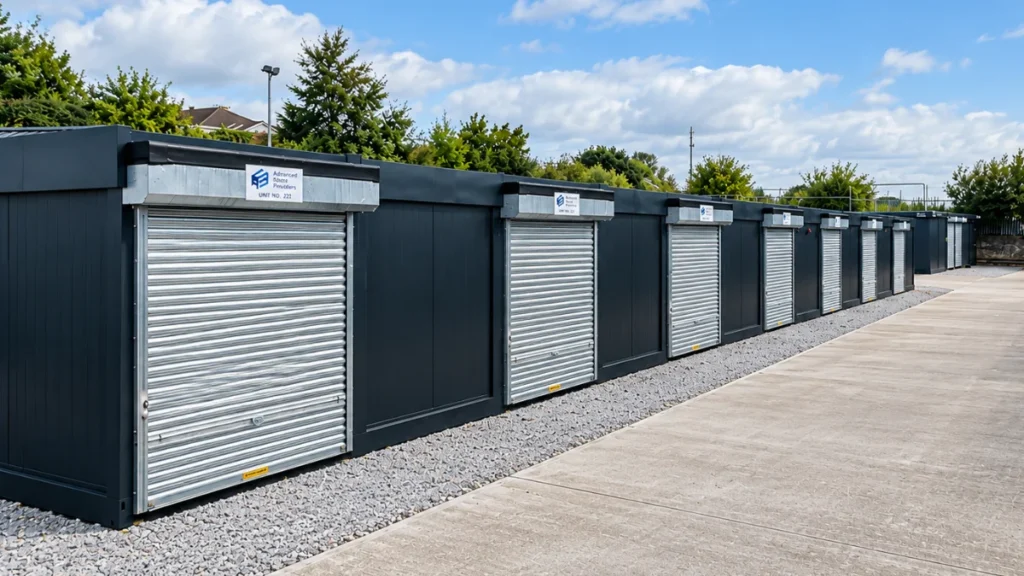
A commercial storage unit sits in a fixed, purpose-built facility. You get your own enclosed space and direct access. The facility handles the security around it.
At Advanced Space Providers, we operate the Business Storage Hub in Limerick, offering commercial bay units for businesses that need secure space for stock, tools and equipment.
What that looks like in practice:
- 24/7 monitoring across the hub, so your tools aren’t relying on a padlock alone
- Flexible out-of-hours access, so you can collect tools before an early start or receive a delivery that lands ahead of schedule
- Three bay sizes (one bay at 20ft × 8ft, two bays at 20ft × 16ft and three bays at 20ft × 24ft), so you can match the space to your current needs
- Insulated units, which can reduce the condensation and temperature swings that affect bare steel (discuss any sensitive goods with the team)
For a tradesperson who has been leaving tools in the van overnight, a secure unit gives them a monitored lock-up that’s separate from home.
Ask the team about security and access at the Business Storage Hub.
Mobile vs Self-Storage Security: Side-by-Side
| On-Site Mobile Container | Collected Mobile Storage | Commercial Storage Unit | |
|---|---|---|---|
| Where it sits | Your yard, home or job site | Provider’s depot | Purpose-built storage facility |
| Monitoring | None unless you add it | Usually depot-managed | 24/7 monitored at a facility like ours |
| Who controls access | You and anyone with a key | The provider | You, with your own unit |
| Getting to your items | Immediate | Book a delivery and wait | Direct, including out of hours where offered |
| Damp and weather | Condensation risk in uninsulated steel | Depends on the depot | Insulated units available at Advanced Space Providers |
| Insurance points to check | Lock grade, site security, forced entry | Provider’s cover and your own | Facility security and your own cover |
| Best for | Tools needed on one job site for a set period | Items you won’t need for months | Tools and stock you need regularly and want kept secure |
How to Choose the Right Option for Your Business
Getting mobile vs self-storage security right comes down to how your business works day to day.
Start with how often you need access. If you’re in and out every week, collected storage will slow you down. If you need tools daily, the choice is between a container near the work and a monitored unit you can reach on your schedule.
Be honest about your site. A busy, fenced yard is one risk. A quiet rural driveway out of sight of the road is another.
Talk to your insurer before you move anything. Ask what they expect for lock standards, monitoring and where tools are kept overnight. The answer may rule options in or out.
Think about what damp would do to your stock. Power tools, electrical goods, textiles and boxed stock all suffer in condensation.
Ask the facility the right questions. Where are the cameras in relation to your unit? How is entry controlled? Who else can reach your door?
If you’re weighing these up and want to compare bay sizes against what you need to store, explore the bay options at the Business Storage Hub.
Simple Habits That Make Any Storage More Secure
Whichever option you choose, a few habits reduce the risk.
- Keep a record. Photograph your tools and stock, and note serial numbers. It makes an insurance claim far simpler.
- Pack with theft in mind. Keep high-value tools at the back, with bulky items in front. Label boxes in a way only you understand.
- Check in regularly. Some break-ins aren’t noticed for weeks. Regular visits mean you’d spot a problem early.
Getting the Security Right for Your Tools and Stock
There’s no single right answer in mobile vs self-storage security. A container on site suits a fixed job. Collected storage suits things you can put away for a while.
For tools and stock you rely on every week, monitored storage with direct access is usually the more reliable fit. It takes equipment out of the van and stock out of the house, without signing up for a warehouse.
Tell us what you need to store, how often you need access and when you’d like to start. We’ll help you work out which bay size fits.