
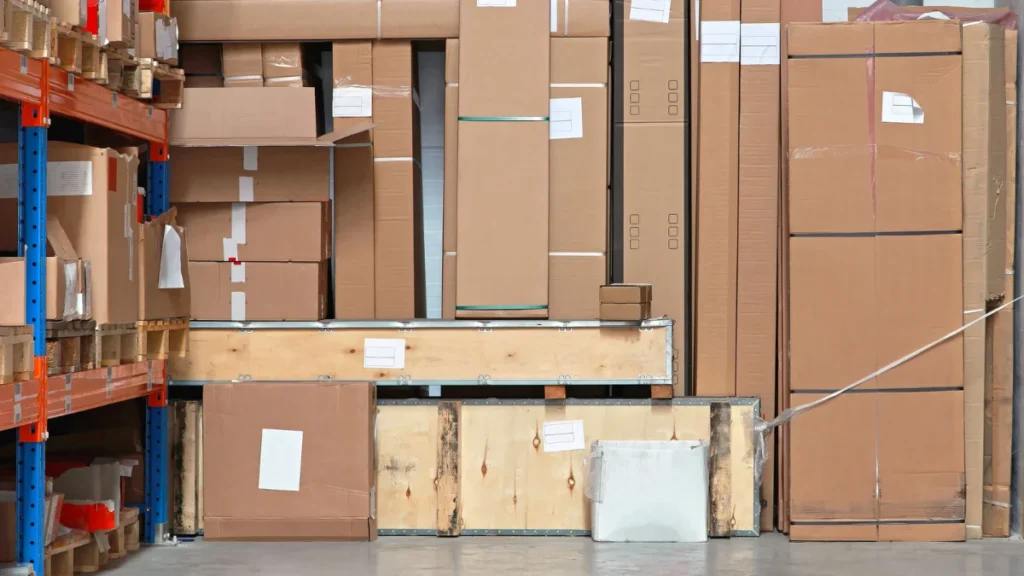
Most Irish independent retailers don’t redesign their stockroom. They add another shelf. Then a pallet in the corner. Then stock starts appearing on the shop floor, and the back room stops being useful.
It’s not a failure of organisation. It’s what happens when a business grows past the space it started in.
Retail stock storage solutions range from racking inside your existing premises to commercial bay units a few kilometres from the shop. The right answer depends on what you’re storing, how often you need access, and how long the pressure is likely to last.
This article compares four practical options for Irish retail business owners managing stock that has outgrown the back room.
Key Takeaways
- Back-room racking works for reorganising existing space but has a hard limit once square footage runs out
- Portable storage units offer flexibility but typically don’t include the security, handling or access features that business stock requires
- Shared warehousing and 3PL providers tend to suit businesses with steady order volumes, and are often built around online orders
- A commercial storage bay off-site gives you dedicated, secure space that you control, with flexible terms and no long-term warehouse commitment. With different bay sizes available, you can choose the space that best fits your stock levels and storage needs.
What Are the Best Retail Stock Storage Solutions for Independent Irish Shops?
For independent Irish retailers running out of back-room space, the most practical solutions fall into four categories: internal racking and shelving, portable storage containers, shared warehousing, and dedicated commercial storage bays. Racking suits shops with room to reorganise. A commercial bay off site suits retailers whose stock has genuinely exceeded the premises, without requiring a warehouse lease.
Why Back-Room Space Becomes a Problem
The stockroom was probably fine when you started. It was sized for what you were ordering then, at the supplier terms you had then.
Buying in bulk changes the calculation. Seasonal ranges arrive weeks before they’re needed on the floor. A good supplier deal means taking a larger quantity than you can move immediately. Returns pile up in one corner. Deliveries start landing on the shop floor because there’s nowhere safe to receive them out back.
Stock counts become unreliable when goods are split between the back room, the shop floor and sometimes a van parked outside. That unreliability has real costs: reorders going out too early, overselling, and deals turned down because you can’t see clearly what you have.
The options below address that problem from four different angles.
Option 1: Dedicated Commercial Storage Bay (Off-Site)
A commercial storage bay gives you a standalone unit you control, at a facility set up for commercial use.
The key benefit is that you can rent on terms that match your trading cycle. That means stepping up before a seasonal peak and stepping back once demand drops, without committing to a warehouse arrangement.
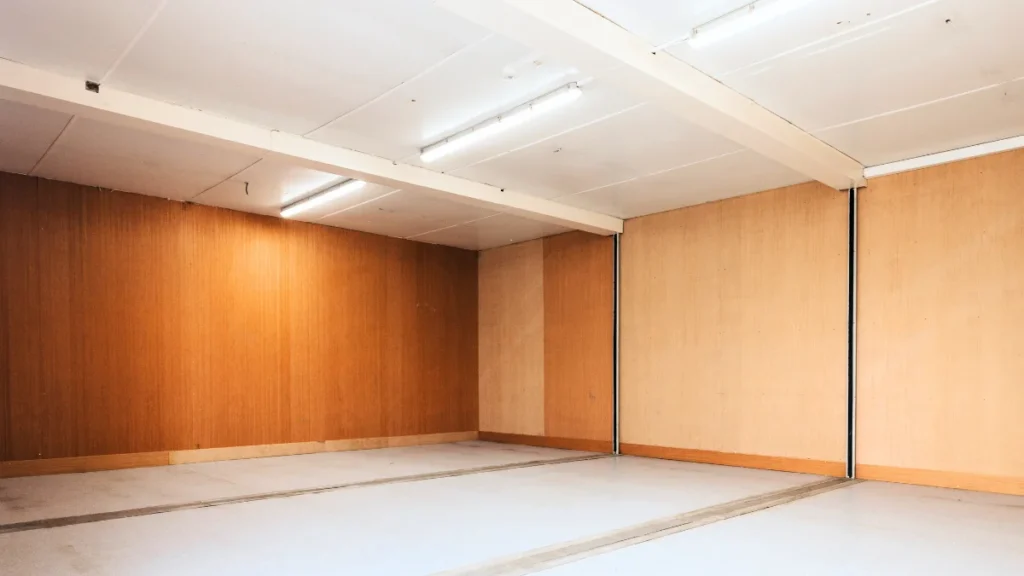
Advanced Space Providers’ Business Storage Hub in Limerick offers insulated bay units with 24/7 monitoring and flexible out-of-hours access. Three bay sizes are available: 20ft × 8ft, 20ft × 16ft and 20ft × 24ft. The right size depends on your stock type and volume during peak periods.
Forklift hire is available on site, which removes the need to organise outside handling when pallet deliveries arrive from suppliers. The hub is centrally located with easy motorway access, which matters when you’re making regular collections or distributing across Ireland.
Explore the bay sizes and talk to the team about what fits your stock.
Who it suits: Retailers whose stock has outgrown the premises but who don’t need a full warehouse, especially if you receive pallet deliveries, need regular access to your stock, or want returns and sellable goods kept in separate areas.
The limit: The stock is off site, so you need to move goods between the unit and the shop, which adds a trip to your routine.
Option 2: Internal Racking and Shelving Systems
The first place most retailers look is the back room itself. There’s often unused vertical space, and a well-chosen shelving system can meaningfully increase usable storage without expanding the footprint.
Boltless (rivet) shelving is the usual choice for lighter boxed stock. It goes up quickly, adjusts easily and typically carries around 80–200 kg per shelf level, so it suits small items and cartons.
Longspan shelving is built for heavier hand-loaded goods like hardware, homewares and garden equipment. It uses longer beams, typically carries 200–600 kg per level depending on beam length, and the open design makes stock easy to scan. Shelf heights adjust as your range changes. Always check the load rating for the specific system you buy.
Who it suits: Retailers who still have usable wall and floor space in the back room, and whose problem is organisation rather than total volume.
The limit: Shelving can only work with the space you have. If the room is already full, adding racking doesn’t solve the problem. It also does nothing for businesses that need to receive pallet deliveries from suppliers.
Option 3: Portable Storage Containers
Portable storage containers are self-contained steel units, typically in 10ft, 20ft or 40ft sizes (some suppliers also offer smaller units), that can be placed on an external site or car park and moved when no longer needed.
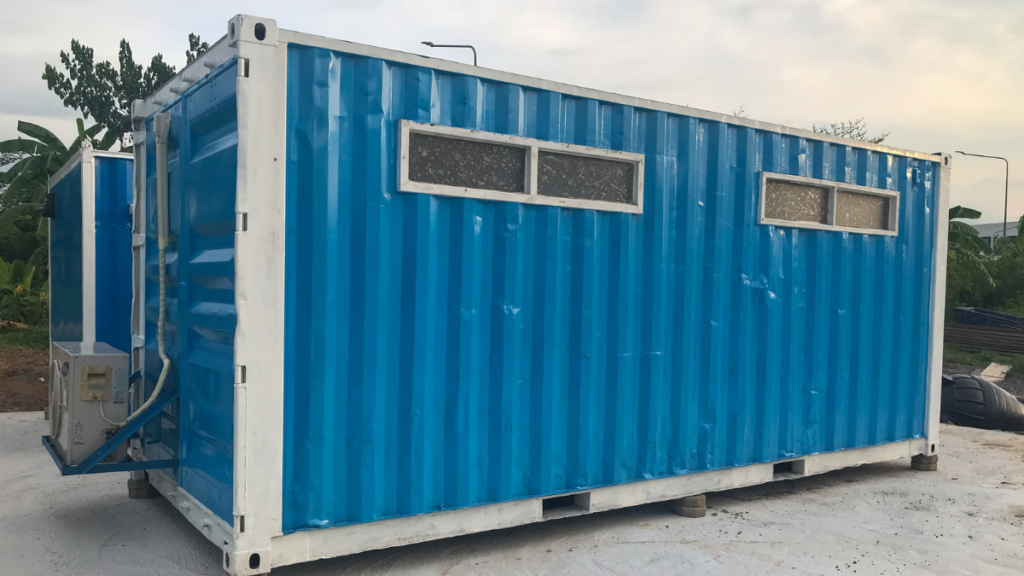
They appeal to retailers who want control over their space without signing a lease. You can have one delivered to an agreed location, load it at your own pace and arrange collection when the season ends.
What they suit: Temporary needs where access is straightforward and goods don’t require climate control. Portable containers can work for a retailer with private land or a yard where a unit can be placed and secured. Check with your landlord and local planning authority before placing a container, as the rules depend on the use and location
The limit: Regular containers usually come with a lockable door but not 24/7 monitoring or handling equipment. If you’re receiving pallet deliveries from suppliers, managing returns alongside sellable stock, or accessing the unit regularly through winter, they’re not set up for it. Standard steel containers lack built-in insulation, which matters for goods sensitive to temperature swings, although some suppliers offer insulated and shelved versions.
Option 4: Shared Warehousing and 3PL Providers
Shared warehousing means renting space within a larger logistics facility, often alongside other businesses. Third-party logistics providers (3PLs) go further, managing pick, pack and dispatch on your behalf.
For retailers at a certain scale, 3PL arrangements can free up significant time. Inventory management, fulfilment and returns are handled externally.
Who they suit: Retailers with consistent, high-volume stock movement where the logistics overhead justifies outsourcing. Businesses selling large quantities across multiple channels, where the per-unit cost of a 3PL starts to make financial sense.
The limit: Many 3PLs are set up around e-commerce order fulfilment, so they tend to suit businesses with steady, high order volumes. For a small independent retailer ordering seasonally and managing stock alone or with one staff member, that often doesn’t align. Check each provider’s minimums and monthly charges before committing. You also give up direct control over your stock: access is mediated through the provider’s systems and schedules, not your own.
Comparing the Top 4 Common Retail Stock Storage Solutions
| Back-Room Racking | Portable Container | Shared Warehousing / 3PL | Commercial Storage Bay | |
|---|---|---|---|---|
| Best for | Shops with unused wall or vertical space and organised stock | Retailers with a secure private yard or land | High-volume retailers outsourcing fulfilment | Retailers whose stock has outgrown the premises but don’t need a warehouse |
| Setup time | Days to source and install | Usually delivered within days | Onboarding time varies by provider | Typically quick to arrange |
| Flexibility / scalability | Fixed once installed; no easy scale-up | Limited (based on available space) | Scales with volume but tied to provider terms | Choose bay size to match current stock; step up or down as needed |
| Security | Depends on premises | Basic or none | Provider-managed | Look for providers who offer 24/7 security and monitoring |
| Pallet handling | Manual only | No onsite support | Typically included at 3PL | On-site forklift hire makes loading, unloading and moving heavy pallets much easier |
| Stock control | You manage | You manage | Provider manages | You manage |
| Minimum term | No lease required | Usually weekly or monthly | Varies; many providers quote on order volume | Usually flexible, month-to-month |
Tips for Choosing the Right Solution
Start with your access pattern. How often will you need to get in? Daily picking requires easy, out-of-hours access. Quarterly archiving doesn’t. The answer narrows the options quickly.
Consider how your stock is delivered. If your suppliers deliver on pallets, you’ll need storage space that can accommodate them. Racking and portable containers may not be suitable, as they typically don’t come with the equipment needed to move heavy pallets. A commercial storage bay with forklift hire gives you a practical way to handle palletised deliveries.
Match the term to the need. A seasonal swing doesn’t justify a year-round warehouse commitment. A month-to-month arrangement on a commercial bay is more practical than signing a lease for a problem that lasts a few months.
Separate your stock categories. Wherever you store, make sure returns, sellable stock and incoming deliveries have distinct areas. The right retail stock storage solutions should make that organisation practical, not harder.
Consider what you’re actually storing. Goods that are sensitive to damp, cold or condensation need insulated storage.
The Practical Next Step
If back-room racking was going to solve the problem, it probably already would have. The businesses that find a commercial storage bay useful are those where the stock has genuinely grown past the premises, but a full warehouse lease isn’t the right answer.
Talk to the Advanced Space Providers team about what your stock needs.